
Stretching from Genoa to Ventimiglia, with charming towns and beautiful beaches, the Riviera di Ponente has so much to explore, whatever the season, says Jane Keightley.
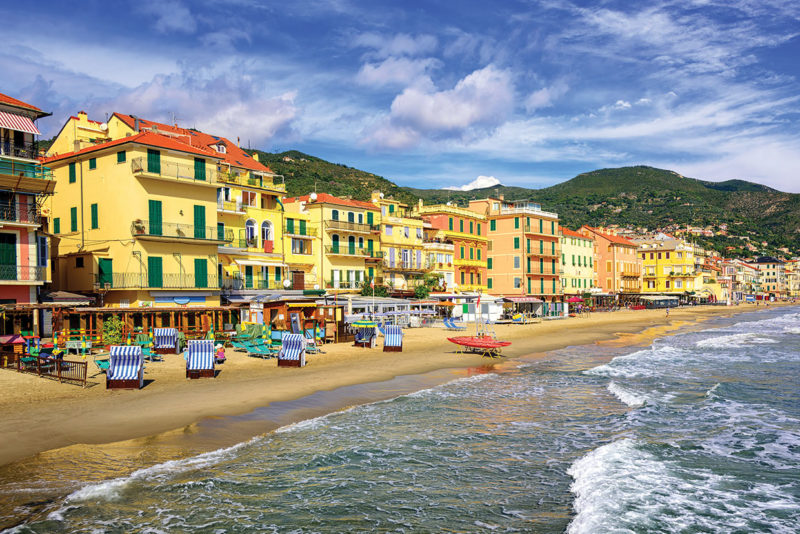
Though it is not as well known as the Riviera di Levante, where visitors flock to the Cinque Terre and Portofino, the Riviera di Ponente has a charm all of its own.
The seaside resorts along this coast (which stretches 160 kilometres from Genoa to Ventimiglia and then the French border) were favourites of European aristocracy in the 19th century. Nowadays, it is mostly Italian holidaymakers who come here. So if you want to get a taste for everyday Ligurian life and don’t want to be just another tourist crammed like a sardine in a tin, head in a westerly direction after you arrive in Genoa.
If you want to get to your destination quickly, the Autostrada dei Fiori will get you there. However, it’s better to follow the Via Aurelia along the coast and explore the seaside towns as you go; places like Noli, Alassio, San Remo, Bordighera and Ventimiglia.
This area is more than just beaches, though. Mountains rise up behind the coast, the hinterland foothills draped with verdant vines, olive groves and ancient hilltop villages to explore. Keen hikers and cyclists will think they have died and gone to heaven!
Here are 10 things you won’t want to miss on a trip to the Riviera di Ponente:
1. Take time to explore the streets and port of Genoa
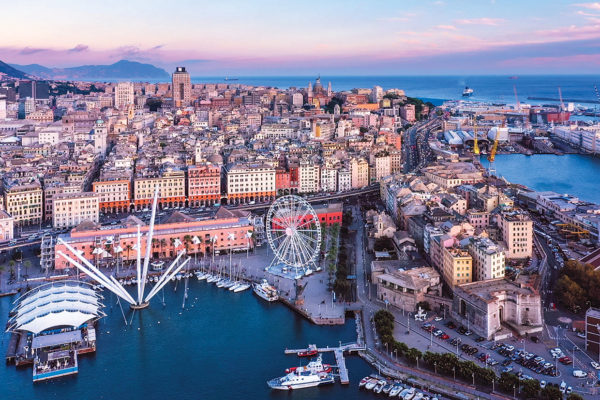
A lot of visitors to Liguria will start here, most of them probably flying into Aeroporto Cristoforo Colombo, named after the explorer who reputedly came from here. Although Genoa is not as famous a tourist destination as Rome, Florence or Venice, it has a lot to offer and is well worth exploring before you head for the coast.
The Welsh poet Dylan Thomas wrote home to his parents giving his impressions of the place: “The dock-front of Genoa is marvellous. Such heat and colours and dirt and noise and loud wicked alleys with all the washing of the world hanging from the high windows.”
The city has changed since then, but only to a degree, and this is part of its charm. From the dark medieval lanes (or caruggi, as they are known) to Via Garibaldi, which is full of grand palaces with magnificent art collections, Genoa is a city of contrasts.
2. Visit the formerly independent republic of Noli
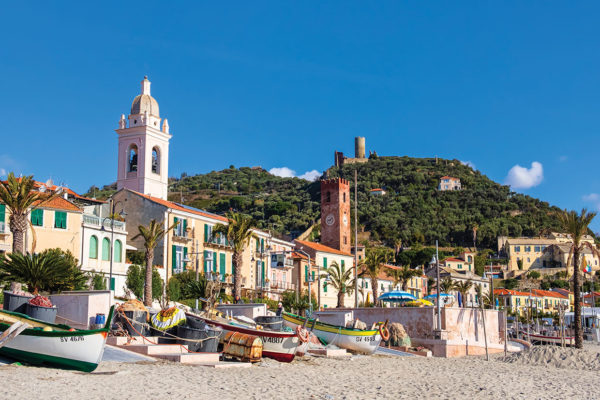
The lovely fishing town of Noli is one of the borghi più belli d’Italia. Its sandy beaches have been designated as Blue Flag, so they are clean and safe for swimming. Brightly coloured fishing boats are dotted around the beach, where you can walk along its palm-fringed promenade.
Towering above the town is a ruined castle that inspired Dante’s image of purgatory. The historical centre of the town, which was an independent republic for 600 years, once had 73 towers, which was one more than San Gimignano, though very few remain.
3. Enjoy the long, sandy beach of Alassio
Alassio has one of the longest sandy beaches along the Riviera di Ponente, which makes it a very popular resort with families.
In the 19th century, Alassio was discovered and colonised by the English, who built splendid villas and gardens, their own church and a tennis club here. Even now, there is an English lending library; one of the biggest in Italy.
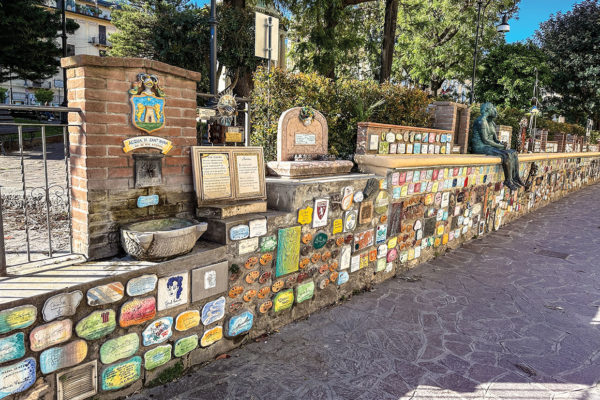
Don’t miss the Muretto, a long wall of ceramic tiles covered with the signatures of many different celebrities. Legend has it that the writer Ernest Hemingway suggested the idea to the owner of the Caffè Roma opposite.
4. Don’t miss Bordighera
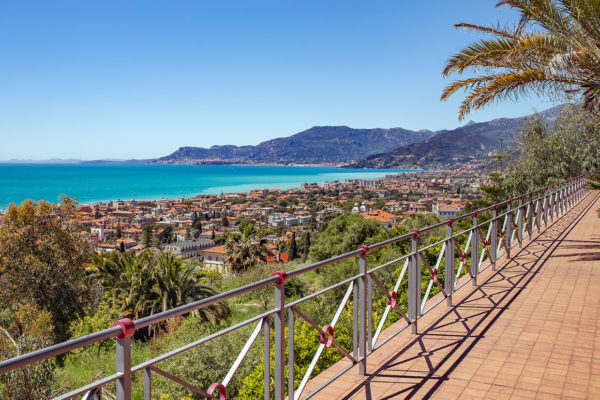
Another lively resort jam-packed with grand 19th-century buildings and Art Nouveau villas from when it was the place to be for wealthy European tourists.
Monet stayed here for three months painting many views of Bordighera and its surrounding villages. Queen Victoria visited and so did Queen Margherita of Italy, of pizza fame.
The beautiful palm tree-lined seafront walkway was opened by Eva Perón and named Lungomare Argentina in her honour. Bordighera is blessed with so many palm trees that they have supplied the Vatican with palm fronds for the Palm Sunday services in Saint Peter’s Basilica for years.
The story goes that Sant’Ampelio, whose 11th-century church is situated on the rocky promontory at the end of the Lungomare Argentina, brought some palm seeds from Egypt and made Bordighera the most northerly palm grove in Italy.
5. Discover historic San Remo
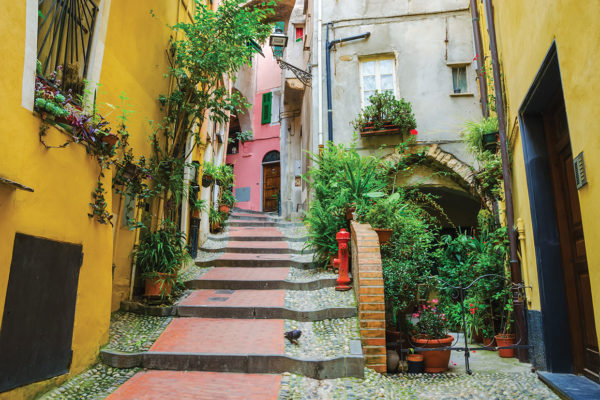
San Remo is the biggest seaside town along this coast and, like others, was popular with the English. The Russian royal family were also regular visitors, and the Lungomare Imperatrice on the seafront was named after Tsarina Maria Alexandrovna.
With many interesting places to explore, the town’s historical centre, La Pigna (the pine cone), is a maze of steep lanes and narrow tunnels that run in concentric circles from the top of the hill. San Remo is also famous for its casino, which is one of the largest in Europe.
The Villa Nobel, where the famous Swedish scientist lived, is another interesting place to visit. In the basement of the villa is a small museum about Nobel’s invention of dynamite. Without this invention all the tunnels through the mountains in Liguria and the rest of Italy would not be there. The flowers that decorate the Nobel Prize ceremonies in Oslo come from San Remo.
6. Learn about the histories of places like Seborga and Bussana Vecchia
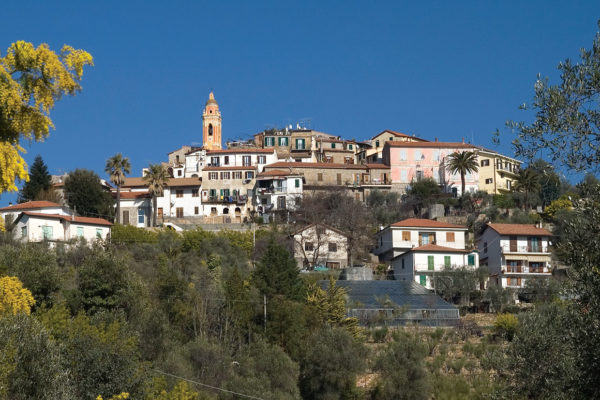
Seborga has panoramic views over the valley and the coast, narrow alleys to get lost in and restaurants serving the local cuisine. This village proclaimed itself a sovereign state in the 1960s (not recognised by Italy) and has an elected prince or princess, its own currency, postage and national anthem. You know you have arrived when you turn a corner and come across a sentry box with a blue and white flag on it.
Meanwhile, high on a hill behind San Remo stand the ruins of Bussana Vecchia. Here, a huge earthquake struck on 23 February 1897. It caused enormous damage to the village and killed most of the congregation when the roof of the church caved in during an Ash Wednesday service. For 60 years, Bussana Vecchia was an abandoned and forlorn place, until the 1960s, when a group of artists moved in. They now sell their wares to tourists.
7. Traverse the historic hinterland
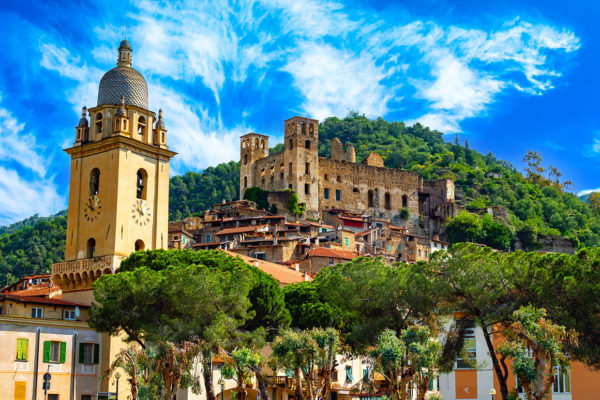
The hinterland of the Riviera di Ponente is blessed with an abundance of medieval towns and villages. My favourite is Triora, nestled in the high Argentina Valley. It is notorious for holding the last witch trials in Italy and has atmospheric tunnels and passageways you really don’t want to wander around on your own at night.
Apricale also has steep, dark alleyways, and it is worth climbing to the Piazza Vittorio Emanuele, where there are far-reaching views and a good restaurant. A single-arched, 15th-century bridge leads into Dolceacqua old town with its subterranean passages.
Above are the ruins of the Castello dei Doria, once the stronghold of the Doria family. The lords of this family would exercise their feudal right to sleep with a bride on her wedding night, but one bride called Lucrezia resisted, was imprisoned and subsequently starved herself to death. She is celebrated in the Sagra della Michetta on 15 August.
8. Savour the local food
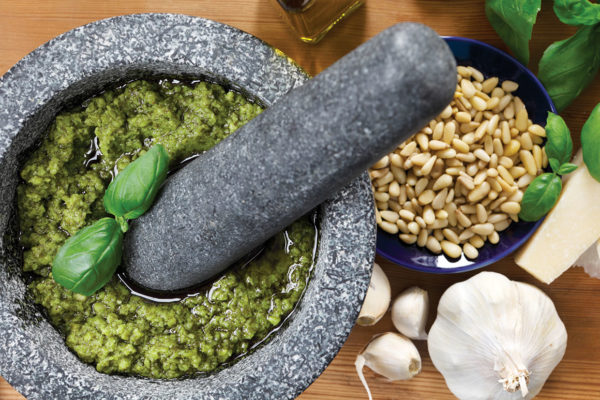
When Liguria is mentioned, it is usually pesto that springs to mind as a typical food product of the area, but there are so many other specialities to enjoy; focaccia, olives, savoury tarts, farinata, trofie and pansotti pasta are just a few.
However, pesto genovese is definitely the best-known speciality, and it has to have the right ingredients. It must have basil from Genoa, Ligurian olive oil and garlic from Vessalico. The pine nuts must come from the Mediterranean area, the salt from Cervia, and the parmesan and pecorino cheese must come from Sardinia. And these must all be mixed in a pestle and mortar.
Foccacia genovese is the best type of foccacia and must be perfectly salted, crisp on the bottom, dimpled with thumbprints on the top, and slathered with Ligurian olive oil. Liguria is not well known for its wines, but in Dolceacqua they produce an excellent red wine called Rossese.
9. Stroll in the Hanbury Gardens of Ventimiglia
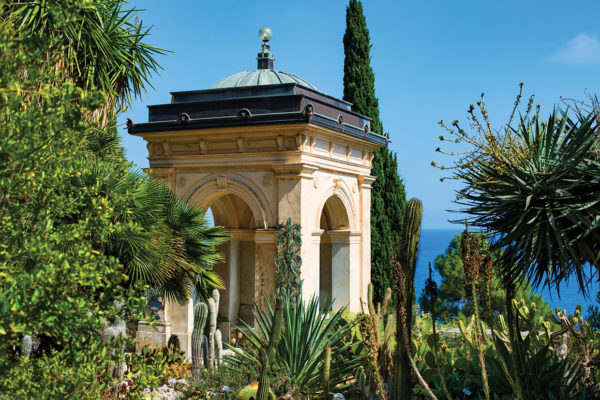
Ventimiglia is the last town before the French border and is where you can jump on a train for a day out in Nice or Menton. The biggest attraction around Ventimiglia is the Hanbury Gardens. This is the oldest botanical garden on the Riviera and was founded in 1867 by Thomas Hanbury, an English businessman who had made his fortune trading in the Far East.
Hanbury came here to recuperate from an illness and fell in love with the place. During his travels, he brought rare specimens of plants to fill his huge garden, and today there are more than 3,500 varieties of different plants here. His brother Daniel, a well-known botanist, contributed significantly to the development of the Gardens.
Even if you are not a botanist, this is a lovely place to stroll around on a warm sunny day.
10. Make the most of the hiking and cycling routes
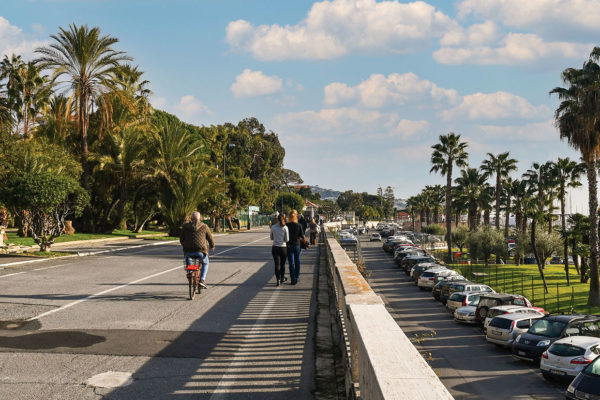
This whole area is a hiker and cyclist’s paradise. Depending on your fitness level, you can either hike or cycle up in the mountains, or along the coast if you prefer an easier terrain.
One of the most famous hiking trails in Liguria is the Pilgrim’s Path, which runs between Noli and Varigotti. It winds past ancient, deconsecrated churches and reveals breathtaking views of the sea. It passes by Brigand’s Cave, the Tower of the Witches and the Mausoleum of Giuseppe Cerisola, ending at the Church of San Lorenzo where you can enjoy a refreshing swim as a reward for your endeavours.
If you prefer cycling, the Cycle Path ‘dei Fiori’ is a great choice. It starts from Borgo Pinti and ends in Ospedaletti, and runs along the old railway track. It is very well maintained and has fountains and benches dotted along the way.
Expand your journey with more brilliant things to do in Liguria
Written by Jane Keightley (@crazygrannytravelstheworld) for Italia! #217 (October/November 2025)