
This Tuscan chestnut cake, or castagnaccio, is a rustic Italian dessert made with chestnut flour, pine nuts and rosemary. Naturally egg- and dairy-free, it’s perfect for Christmas or winter gatherings.
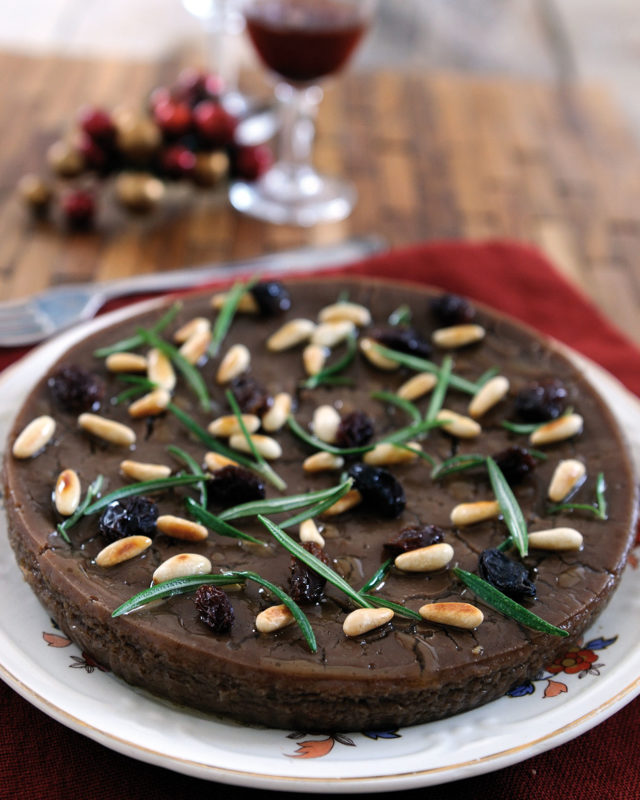
Castagnaccio is one of Tuscany’s most distinctive desserts. Made from chestnut flour rather than wheat, it’s dark, dense and gently savoury, enriched with olive oil and scattered with pine nuts, raisins and rosemary. Naturally vegan and gluten-free, it’s a cake that feels rooted in both landscape and tradition, particularly in the colder months when chestnuts have long played an important role in rural Italian cooking.
Once known as the “poor man’s cake”, castagnaccio was designed to be nourishing rather than indulgent. Chestnut trees, often called the bread trees of Italy, thrived along the Apennines, providing flour when wheat was scarce. Over time, small additions like raisins and pine nuts transformed this humble batter into something far more celebratory, while still retaining its rustic character.
In Tuscany, castagnaccio is especially associated with autumn and Christmas, when hearty, unfussy desserts take centre stage after long family meals. It’s not overly sweet, which makes it an ideal end to a rich feast, particularly when served with a spoonful of sweetened ricotta. Simple to prepare and full of history, it’s a dessert that perfectly captures the frugal abundance of the Tuscan table.
Ingredient note: chestnut flour
Chestnut flour is naturally gluten-free and has a distinctive, gently sweet flavour that sets castagnaccio apart from other cakes. In Italy, it’s traditionally milled from dried chestnuts and has long been used in rural cooking, particularly in Tuscany and along the Apennines, where chestnut trees were once a vital food source.
When buying chestnut flour, look for a fine, pale brown flour with a fresh, nutty aroma. Because of its natural sugars, chestnut flour can turn bitter if it’s old, so freshness really matters. Italian brands are widely available in delicatessens and online, especially in autumn and winter.
There’s no true substitute for chestnut flour in this recipe as it’s essential to both the flavour and texture of castagnaccio. However, if you’re unfamiliar with it, think of this Tuscan chestnut cake less as a sponge and more as a dense, pudding-like bake. That’s exactly how it’s meant to be.
Tuscan Chestnut Cake | Castagnaccio
➤ SERVES: 6
➤ PREPARATION: 15 minutes
➤ BAKING: 25-30 minutes
➤ VEGAN, GLUTEN-FREE
Ingredients
- 250g chestnut flour
- 50ml olive oil
- 375ml water
- 30g pine nuts
- 50g raisins, soaked in hot water, then drained
- A few rosemary needles
Method:
- Preheat the oven to 200ºC/Gas Mark 6. Place the chestnut flour in a large bowl and add half of the olive oil and all of the water. Mix thoroughly to create a batter, ensuring that there are no lumps.
- Grease a round 20-22cm baking dish with olive oil, then pour in the batter. Top the batter with the pine nuts, raisins and rosemary needles. Finally, drizzle over the remaining olive oil, then bake in the oven for 25-30 minutes.
TIP: This goes very well with a sweet ricotta cheese. Simply stir together ricotta with icing sugar to taste.
Looking for festive sweet treats? Try these Italian Dolci recipes
Recipe by Mario Matassa