
Explore Tropea town, the Coast of the Gods and the surrounding countryside with Kate Wickers.
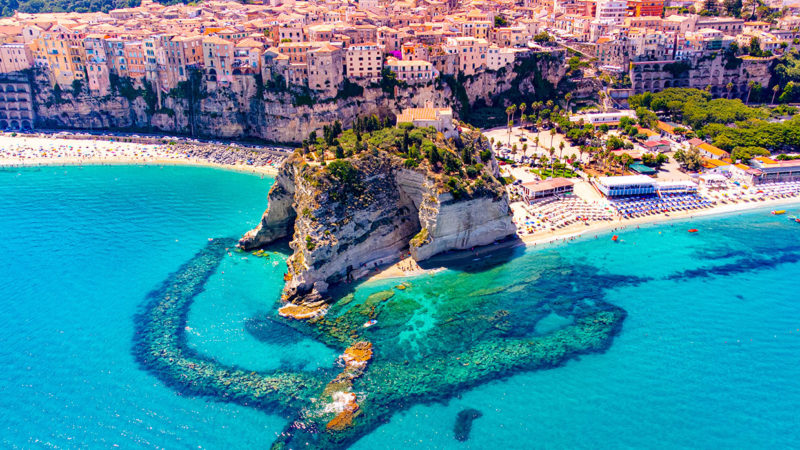
Sitting pretty on Italy’s Calabrian toe sits southern belle Tropea. This seaside resort town remains delightfully off the tourist map (compared to other coastal beauties such as Amalfi) and is still more popular with holidaying northern Italians than it is with foreign visitors.
The town, which won the title of Italy’s Borgo de Borghi (Village of Villages) award in 2021, takes its name from the Greek word tropaia, meaning trophies, and is known as the ‘pearl’ of the Costa degli Dei (Coast of the Gods).
Built on granite rocks above a spearmint-blue Tyrrhenian Sea, your first glimpse is breathtaking. Undoubtedly the town and its fine beaches will be a focus of your stay, but don’t miss striking out into the countryside for farm visits, liquorice-scented hikes, and snoops around ancient cave dwellings, as this brings another perspective.
Tropea’s grand 18th-century palazzi (80 noble families once resided here) give a somewhat false picture of Tropea in the 21st century, as today the people tend to live more by the age-old Calabrese saying that nicely sums up their love of family, home and home-grown food.
It goes: “E megliu nu pezze e pane cu cipuli a casa tua ca storzi a la casa e l’attri” (better bread and onion in your own home than great feasts in the homes of others).
Top 10 things to do in Tropea
1. Take a walking tour with a local archaeologist
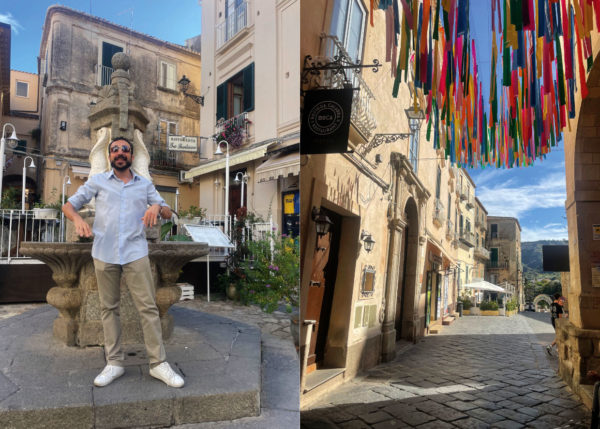
A walking tour of the old town is a great introduction to Tropea’s chequered history. This is particularly true when guided by local archaeologist Dario Godano, who is full of amusing anecdotes.
Tropea’s first traces of human settlement date from the Neolithic period, and in the 3rd century BC the Romans snatched Tropea from the Greeks, who’d colonised Calabria in the 8th and 7th centuries BC.
The town continued to be squabbled over through the centuries until the Tropeans clubbed together and bought the town’s autonomy from King Philip III of Spain in 1615. This coined another favourite Calabrese saying: “È megghiu nu juornu rrhe tauru ca centanni manzu!” (Better a day as a bull than a hundred years as domesticated cattle).
The striking Norman cathedral was built at the end of the 11th century and contains two undetonated bombs that could easily have wiped the town out in the Second World War.
The tour ends at picture-perfect Santa Maria dell’Isola, a 6th-century Benedictine monastery that’s had several makeovers after earthquakes. Today it serves as the pin-up for Tropea tourism, sitting atop a rocky islet, and is best viewed at sunset from Afficione del Cannone (a square named for its 17th-century cannon).
2. Pay your respects at the Chiesa di Piedigrotta
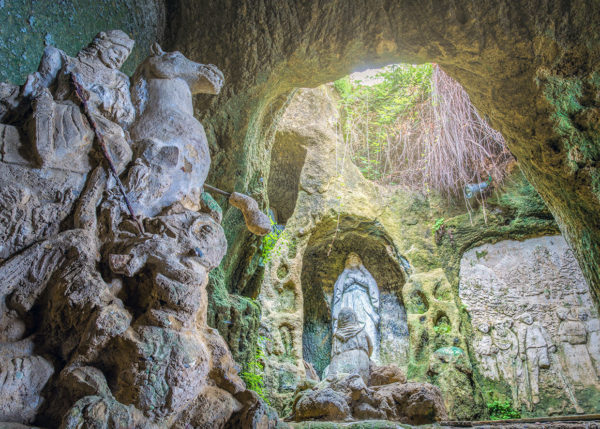
In the pretty seaside town of Pizzo, shipwrecked Neapolitan sailors are credited with creating this little gem: the Chiesa di Piedigrotta, a whimsical chapel carved into the beachside cliffs in 1670, dedicated to the Virgin Mary.
Although its exact history remains a little sketchy, the grotto is wonderfully atmospheric, adorned further by pilgrim fishermen who came to pray for safe voyages and protection for their boats.
In the late 19th century, father and son Angelo and Alfonso Barone took the interior decoration to a whole other level by carving statues of saints and biblical figures from the rock, turning it into a bijou holy theme park. Today, it’s beautifully restored from the ravages of time.
3. Snorkel in Italy’s clearest water
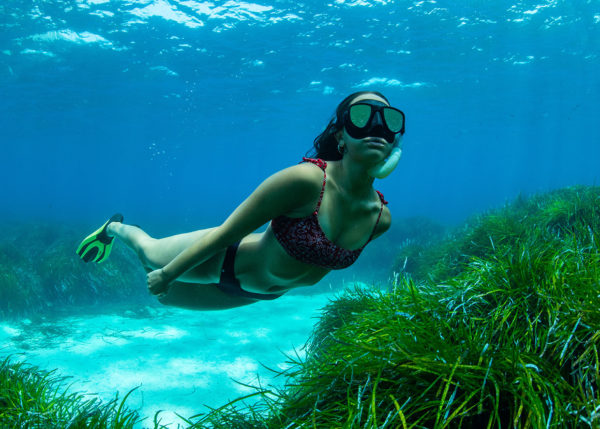
Some of the best snorkelling spots in Italy are found in the crystalline waters under the cliffs of Capo Vaticano, seven kilometres along the coast from Tropea, with views to Sicily.
Sea Sports Tropea can whisk you there, stopping en route to see the Sanctuary of Santa Maria dell’Isola, before continuing to the Pirate Lagoon, with emerald waters that could give the Maldives a run for their money. This coastline is riddled with sea-licked caves and powder-soft sandy coves (the beach at Praia I Focu is a beauty), most only accessible by boat.
Other highlights include the Bay of Three Roosters, named for its bird-like rock formations, and Formicoli, once the location of a Roman port and now a natural aquarium of starfish, anemones, and octopus.
If snorkelling isn’t for you, opt for a sunset cruise, complete with prosecco.
4. Enjoy contemporary Calabrian cuisine at Ristorante De’ Minimi
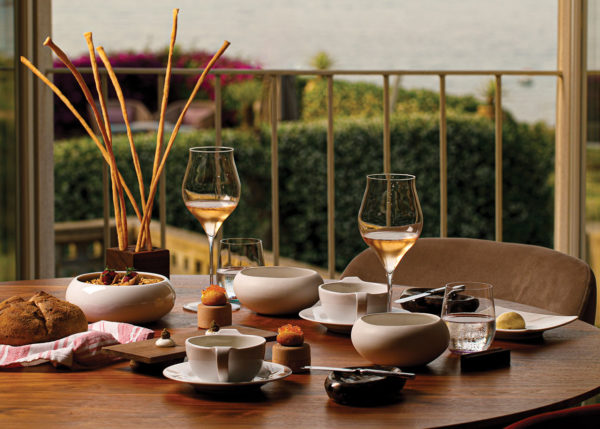
Compared with Naples, Calabria is a little short on Michelin-starred restaurants (currently there are seven). However, that will soon change thanks to young chefs like Emanuele Pucci, head chef at Michelin-recommended Ristorante De’ Minimi, named after the Frati Minimi order of monks that once occupied this 6th-century monastery.
The restaurant is found in Villa Paola, a boutique hotel on the outskirts of Tropea. Book well in advance to enjoy Pucci’s five-or seven-course tasting menu with wine pairing, showcasing Calabria’s finest with a focus on sourcing season-appropriate ingredients for homemade pastas (think mixed pasta with chestnut soup, Pollino mushrooms and caprine cheese) , and creamy risottos (try the Sibari Carnaroli rice with Calabrian black piglet, vegetable jus and bay leaf).
In warm months, you can dine by candlelight on the terrace with views to the town and port.
5. Explore ancient cave dwellings
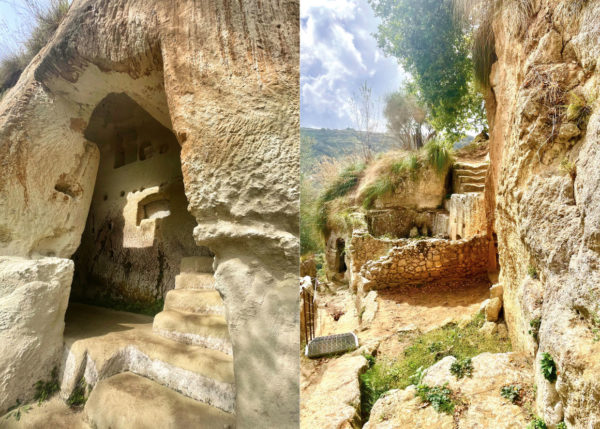
A thirty-minute drive from Tropea brings you to the agricultural town of Zungri. Founded by fugitives from Africa and nearby Sicily, its ancient cave dwellings (known as the Sbariati rock village and only discovered in 1983) are believed to have been hewn from the rocks between the 9th and 12th centuries.
Zungri is a quiet, unassuming town where cocks crow and cats bask, and farmers in their free time paint their front doors with pastoral murals and pen proverbs on their walls.
Before exploring the caves, visit the Peasant Civilisation Museum, which is rammed full of artefacts that offer great insight into the history and customs of this region. (Particularly interesting are the photographs of the devastating earthquake of 1905).
From here, it’s a steep climb down a staired walkway to the caves, pretty much left to nature’s whim, which conjure images of both the nativity and scenes from Star Wars films.
6. Enjoy a lazy beach day
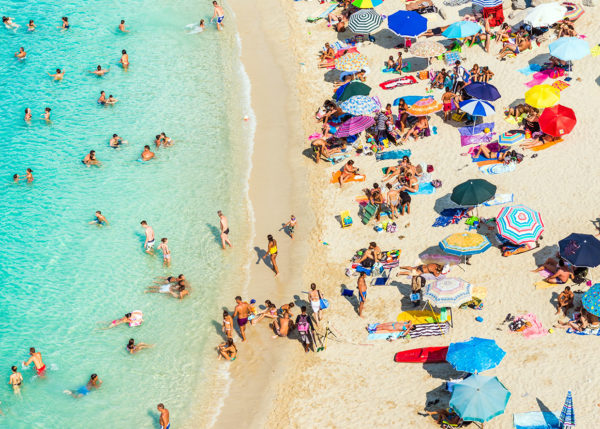
Tropea’s beaches are some of the cleanest in Italy and range from the pay-as-you-sunbathe lido experience (complete with bed, parasol, and bar) to the town’s public beach, which lies below Santa Maria dell’Isola and has a pleasingly retro feel.
Here, men strut in Speedos, women in floral swim hats breaststroke into crystal-clear water, and kids build sandcastles reminiscent of the Santa Maria church above them on the hill.
Pick up a picnic of arancini and clementines (the region’s most prolifically grown citrus fruit) and roll out a towel, because there’s really nothing more blissful than letting lively Italian chatter and the lap of waves lull you to an afternoon doze.
7. Eat in a time-honoured ristorante
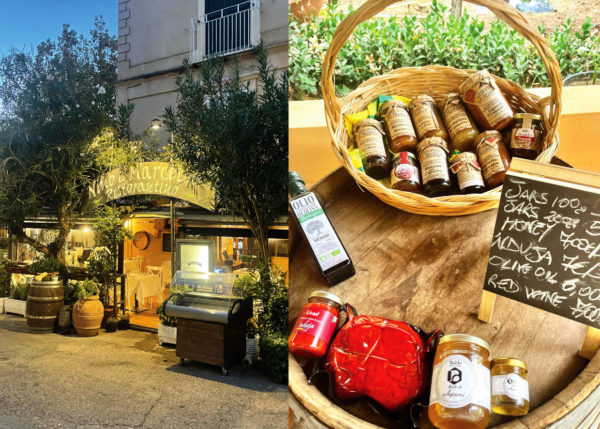
Tropea has family and tradition at its heart, and you’ll find many a second-and third-generation ristorante (the best of them often tucked away in a side street or on a cobbled piazza). These are the places to order a local wine, such as Greco Bianco, and while away the hours watching life wander by.
At II Marchese, try the chewy local pasta fileja (rolled on a wire to an elongated, slightly curved shape and made without egg).
Not to be missed either is ’nduja, the region’s spicy sausage (now achieving global stardom), which is in everything from arancini to pasta sauces. Eat this at the town’s oldest pizzeria, Vecchio Forno, a family concern since 1936, which once ran as a communal bakehouse where locals brought their kneaded bread to be baked.
Tartufo is an ice-cream bomb with melted chocolate at its centre that originated in the nearby village of Pizzo. They are served everywhere, but for the greatest selection, head to Bar Papillon to try tartufo al bergamotto (made with bergamot, a cross between a lemon and bitter orange which is only found growing in Calabria.
8. Hike through Serre Park
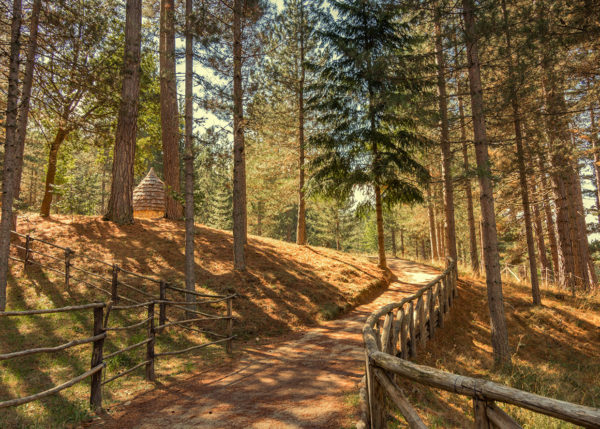
Calabria is a region of rugged and wild nature and boasts three national parks, Sila, Pollina, and the nearer and less-visited Parco Naturale Regionale delle Serre (a 90-minute drive from Tropea). Here, amid silver fir, pine, and chestnut trees, hikes range from gentle to moderate to difficult across 43.7 acres of woodlands and forests, once the hunting grounds of Bourbon kings.
The air is scented with camphoraceous myrtle and wild liquorice. While walking, keep an eye out for wild boar, weasels and the rare Corsican hare.
Although there are marked trails, it’s best to go with a guide to reach many of the park’s highlights, such as the imposing Marmarico waterfalls (southern Italy’s highest at 114 metres). Le Vie della Perla organises personalised, small group or individual eco-friendly hikes, led by experienced guides. Also look out for the ancient Carthusian Abbey in Serra San Bruno and the Byzantine Cattolica in Stilo.
9. Spend time with an onion grower
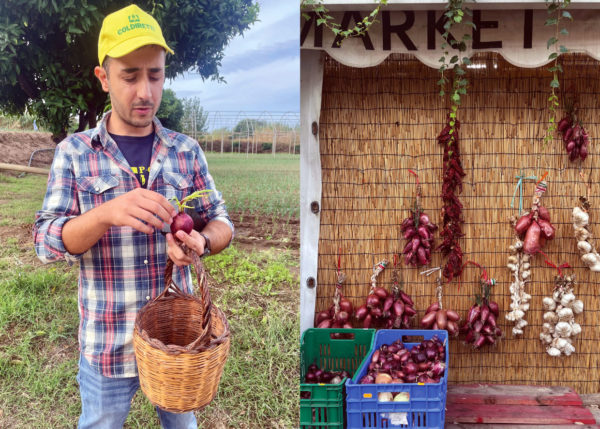
On the more unusual side of day trips, the Onion Experience is certainly this region’s most appropriate, as the cipolla rossa di Tropea, known also as the red queen, is the absolute produce prize. Not bulbous but elongated in shape, like a large red shallot, and sweet enough to simply chop, sprinkle with salt and enjoy raw, it is lauded by top chefs as the world’s finest.
To learn more about this special vegetable, take a tour with fourth-generation local grower Marco Furchi, whose passion for these sweet and crunchy onions (they are low on pyruvic acid, so won’t make you cry) is palpable.
As well as a tour of Marco’s farm, where small-scale production of wine and olive oil also takes place, you’re invited to taste all that the Furchi family make. Around the kitchen table, fresh farmhouse bread is served with caponata with onion, tomatoes, capers, aubergine, and cipolla caramellata (a sweet, caramelised onion chutney). And it doesn’t stop there. It’s also accompanied by a homemade pecorino cheese, doused in honey from bees that his uncle keeps, and bergamot marmalade made specially by mamma. It’s an utterly delicious way to spend a few hours.
10. Soak away aches and pains in a salt-water Thalasso Spa
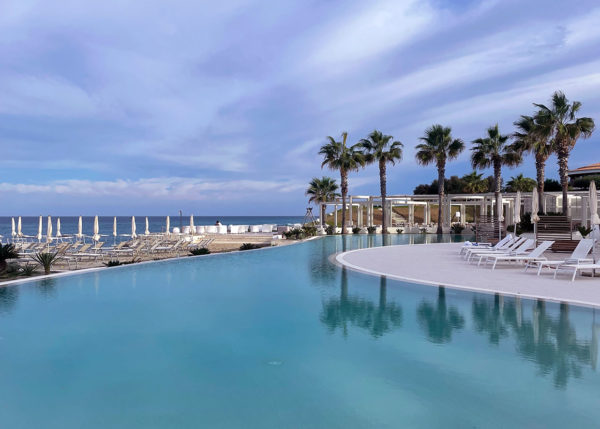
If you thought that booking into a gorgeous Thalasso Spa at a swanky Italian seaside resort was out of your budget, think again. Capovaticano Resort makes for a wonderfully relaxing escape and is value for money.
Here, 2,000 square metres of saltwater pools, located both inside and out, are bubbling with therapeutic properties. Book in for a ‘wellness trail’, which includes hydromassage stations, sensory showers, and steam rooms.
Treatments must be pre-booked, and weekends can get busy, so try to visit during the week. Staying with the seaside theme, try the seaweed body treatment using algae rich in vitamins and minerals.
Inspire more Italy trips with our collection of top 10 things to do
Written by Kate Wickers for Italia! #220 (April/May 2026)