
Explore bustling markets, inspirational island walks, and enjoy the bounty of autumn on a relaxing getaway to scenic Lake Orta.
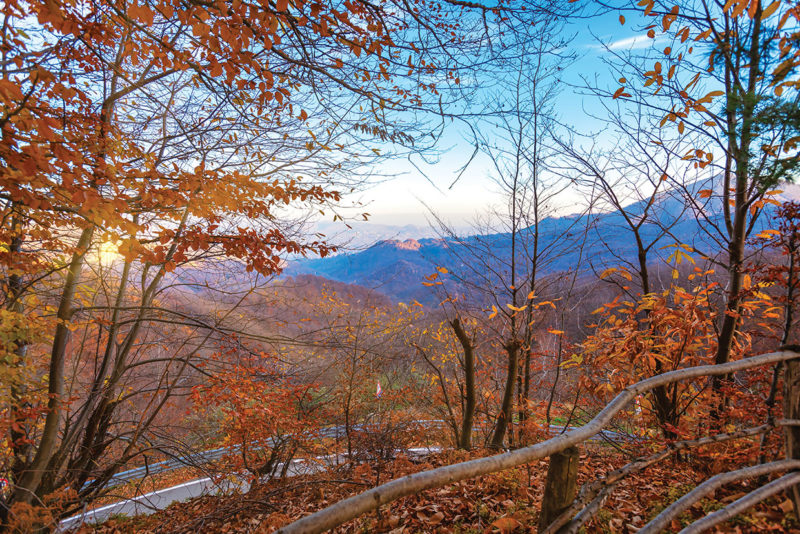
It’s October when I arrive at La Darbia, which lies tucked away in the midst of ancient forest between Lake Orta and Monte Rosa in northern Piedmont. The smell of chestnuts roasting fills the air, wafting from a large iron pan (chock-full of first-of-the-season, shiny, reddish-brown nuts) that swings gently over a small bonfire.
“You’re just in time for the castagnata,” they tell me, as I’m handed a glass of La Darbia’s self-produced red wine. The toast is to autumn, my favourite season in Italy, as it brings the chance to kick through crisp leaves on the hunt for porcini mushrooms and truffles.
Almost every town and village in this area throws a castagnata – a simple, low-key chestnut festival that brings communities together. And at La Darbia, platters of cheese and salami are passed around, along with freshly baked bread and, of course, the chestnuts, which we throw from hand to hand to cool.
There are twenty rooms in total at the agriturismo, and the atmosphere is one of luxury and plenty, with its bountiful kitchen garden, vineyard, and woodlands, in which I spy rosy-breasted redstarts flitting around.
Views over the vineyards
My spacious apartment, with a sitting room and terrace that has views over the vineyards to the lake, may be newly built but is in keeping with original 18th-century farm dwellings.
Looking centuries old, the rustic stone walls are creeping with ivy, fast turning crimson, and inside, the décor is pleasingly neutral (designed to quieten the mind and let the view do the talking), with walls stylishly painted in wide brown and white stripes, reminiscent of the interior of the churches found in the region. A cake, that looks like nonna might have baked, has been left as a welcome gift and sets the tone for all the homemade, locally sourced, seasonal food I’ll be enjoying.
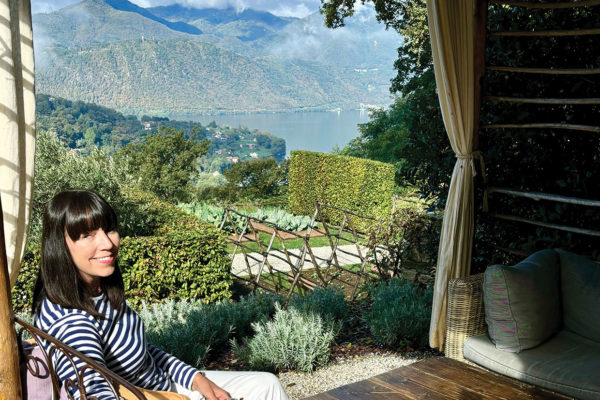
The Milanese often jokingly call Lake Orta ‘La Cenerentola‘, Cinderella, because “she’s much prettier and less spoiled than her bigger sisters.”
Quips aside, it is true that Lake Orta is a real beauty, and that she does receive a lot less tourist attention than Lake Maggiore or Lake Como, for example. The roads are blissfully quiet as I set off to circumnavigate its shoreline; a journey, without stopping, that takes around ninety minutes.
The closest settlement to La Darbia is the medieval town of Orta San Giulio, which has a dreamy, film-set quality thanks to its peeling, ochre-and-pink frescoed buildings and uneven cobbled lanes lined with timber-framed houses.
Tha Palazzo in Piazza Mario Motta, built in 1582, once served as the long-time home to the General Council of Lake Orta. In the present, I snack on free samples at the produce market that has operated here every Wednesday since the 11th century.
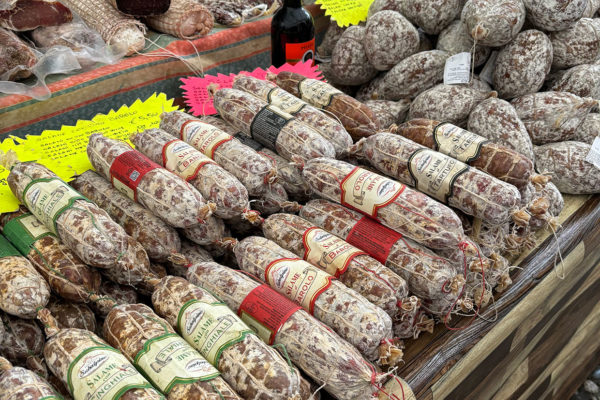
These tasty titbits of salame con Barolo and crumbly gorgonzola are my fuel for making the steep climb to the UNESCO World Heritage Site of Sacro Monte di Orta. It consists of twenty-one chapels (built between 1591 and 1750) that tell the story of St Francis of Assisi through 900 frescoes and 376 waxwork-like sculptures.
The enchanting, leafy-green setting offsets what at times could feel a little eerie (like a holy version of Madame Tussauds), but the architecture is fascinating, charting Italian style over two centuries, from the rival of ancient Rome in the Renaissance to the theatrical Rococo period.
Shuttle boats on Lake Orta
Being of Welsh heritage, I’m fully open to the idea of seeing the remains of a dragon, so I catch the shuttle boat (a ten-minute crossing from the piazza) to visit the 4th-century basilica on the islet of San Giulio.
The story goes that in AD 390, a priest drove away a gang of dragons that was wreaking havoc on the island, and that one dragon’s fossilised remains hang in the sacristy next to the shrine of this dragonslayer. Here, I find a notice which says that the dragon is no longer on display to the public.
To reflect on this disappointment, I take the circular meditation walk (the island is just 275 metres long and 140 metres wide), which was designed by a crafty abbess, head of the island’s Benedictine convent, which is home to seventy-five nuns. With luck, you’ll hear their soft, melodic chanting.
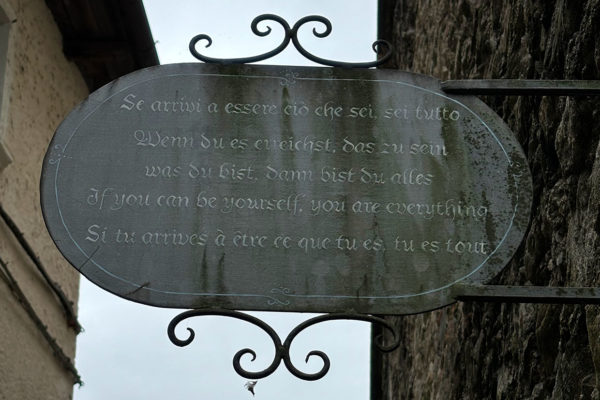
On such a bijou island, encouragement to keep quiet is aided by signs placed along the route to inspire meditative moments, such as, “Listen to the water, the wind, and your footsteps,” and, my favourite: “If you can be yourself, you are everything.”
My day begins with the delivery of a breakfast basket. It’s brimming with local produce, like homemade blackberry jam, pastries, crisp-crusted sourdough, farm-churned butter, and fruit of the season – juicy plums and russet-hued apples. I scoff the lot because I’ve mountains to climb.
To reach the Madonna del Sasso sanctuary, dazzling in white and dominating the eastern cliffside, I leave my car in the village of Arto and tackle the last few miles on foot. As I walk, I pass fields of bell-adorned cows and small hamlets where every house has a stockpile of chopped wood.
The higher I get, the better the vista, opening to a vast, almost full lake and mountain view from the sanctuary’s terrace; a scene that inspired the work of visiting writers such as Byron, Nietzsche and Balzac.
Back lakeside, I call in at the pretty village of Pella, where small pleasure boats bob beside a waterfront lined with pastel-hued houses. Here, an award-winning gelato from Antica Torre is my prize for a morning of hiking; chocolate with grappa is one of the more unusual flavours.
The bigger, more bustling, town of Omegna sits at the far northern end of the lake, from where well-marked hiking trails run. The most popular trail is the Anello di Quarna loop through pinewoods to panoramic lake viewpoints.
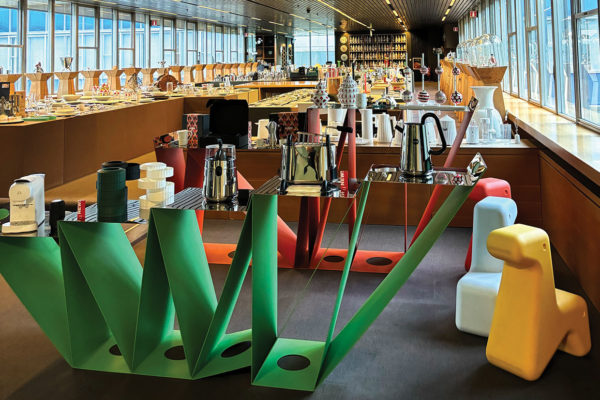
Omegna is also home to the Alessi headquarters and factory; family-owned and famous for its quirky kitchenware. I’ve pre-booked a tour of its archive, home to 25,000 design prototypes and sketches since the 1920s, from pewter coffee pots to the iconic ‘Anna G’ corkscrew.
I pore over designs for a collaboration with Salvador Dalí that never came to production, and delight in other curios that did, such as the Neapolitan coffee pot that took over 200 prototypes to perfect in the 1980s. No photos are permitted because designers continue to use the archive for inspiration.
The factory outlet store is another draw, where I snap up a discounted best-selling Juicy Salif, by designer Philippe Starck, who got the inspiration for the lemon squeezer while dining on squid.
Il dolce far niente: the sweetness of doing nothing
The closest of Orta’s so-called big sisters, Lake Maggiore – famous for its opulent villas, island gardens and grand hotels that have served well-heeled travellers on their Grand Tours since the mid-1800s – is just a forty-minute drive away. To reach Stresa, the epicentre of Maggiore tourism, it’s a scenic forty-five-minute drive over Mount Mottarone, dotted with pre-Alpine farmsteads and herds of bleating, quiff-haired goats.
Taxi boats and ferries shuttle tourists between the Borromean Islands, and I hop over to Isola Bella for a tour of its 17th-century Baroque palace. The stucco-laced throne room is a wow, but for something more unusual, head to the palace grottoes, where it’s a world of pure folly made from lava stone, pebbles, shells, and pink marble. Outside, in terraced gardens, white peacocks strut and gargoyles gurn, and the extravagance continues.
You could easily lose days solely to the pleasure of staying at La Darbia, lazing by the outdoor, heated, salt-water pool, which is lined with sun beds – perfect perches for watching the mists and cloud roll in and out of the valley – while waiting for the reappearance of the sun. There’s a small spa, where I enjoy a massage to ease my aching legs after tackling steep mountain trails, and I take a yoga class, noting that standing in tree pose at sunset, with views to the vineyard, is a lovely way to end the day.
“The Milanese are booking tables months in advance,” my waiter tells me as I settle down in La Darbia’s restaurant. Its fast-growing fame is due to Chef Matteo Monfrinotti, who isn’t afraid to let vegetables star on his menu, though you’ll also find fish and meat too, including a deliciously indulgent beef wellington.
“Don’t tell anyone, but it’s easy to cook beef or fish,” he says. “With vegetables you have to be more creative.”
I order the ‘From the Garden’ five-course vegetarian tasting menu. It included raviolini pasta with chanterelles, ratatouille with sour sauce laced with black truffle, and a pumpkin cream with hot chocolate sauce and thyme mousse, all bursting with vibrant autumnal flavour.
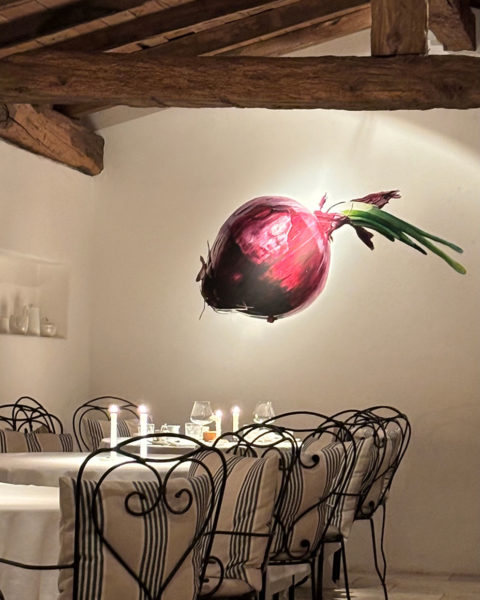
On another evening, I venture out to the hamlet of Crabbia, to dine at Osteria San Martino, so tucked away that without a recommendation, you’d never, ever find it. This chestnut-wood panelled restaurant, with ceiling beams and a wood-burning stove, is about as traditional as it gets.
From the menu, I bypass the rather vague sounding ‘rabbit osteria style’, which is cooked in a creamy, herby sauce, and opt for bagna cauda, a Piedmontese speciality of bubbling fondue made with anchovies, cream, and garlic, served with chopped veg for dipping.
La Darbia’s al fresco bar nestles within the kitchen garden, where the air is fragranced rosemary and plump purple aubergine hang in rude health. Here, I’m happily embracing what the Italians call il dolce far niente, the sweetness of doing nothing, when the general manager passes by. “We’re harvesting our first grapes of the season tomorrow,” he tells me. “You’re welcome to lend a hand.”
The vines are heavy with fat purple Nebbiolo grapes, and I tell him that it will be my absolute pleasure, but that, in the meantime, I think it’s best that I stay exactly where I am and help polish off last year’s vintage.
For more travel inspiration from the area, read the blog: 48 hours in Lake Orta
Written by Kate Wickers for Italia! #217 (Oct/Nov 2025)