
If you’re planning a stay in Rimini, don’t miss a day trip to San Marino, Italy’s closest neighbour and the world’s oldest surviving republic.
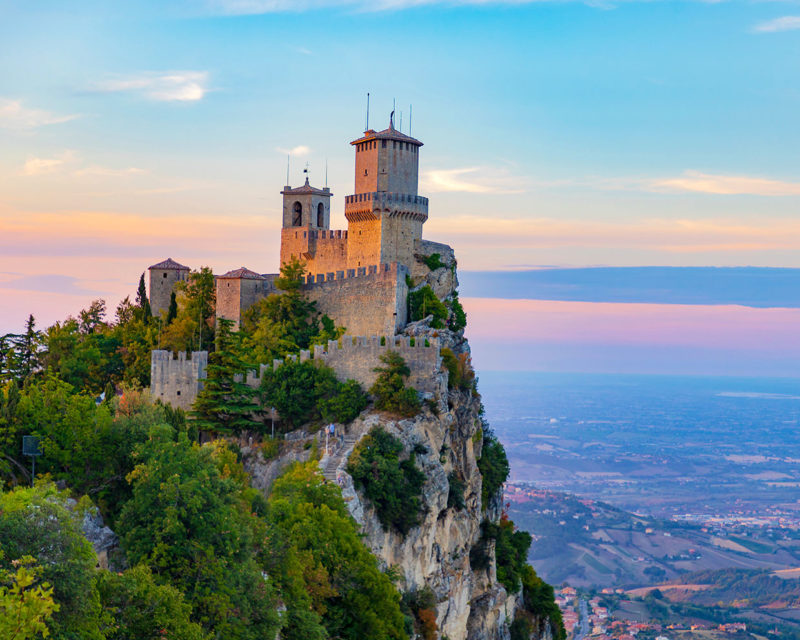
If you think the Italians are a proud bunch, you haven’t met the Sammarinese. “We’ve not been to a war since the 15th century,” said Maria Sara Forcellini, my tour guide, who goes by the name Sara. “We are peaceful, politically neutral and really welcoming; it’s part of our DNA.”
The Republic of San Marino is a small, landlocked teardrop by the Adriatic coastline of central Italy, flanked on one side by Rimini’s beach resort towns, and on the other by historic villages nestled in the foothills of the Apennines. Perched on the summit of Mount Titano, the fortressed ancient centre has looked over the surrounding Italian landscape for much longer than Italy, as a nation state, has existed.
The world’s oldest republic
From the clifftop by the third tower on the summit of Mount Titano, the view was magnificent. I could see as far as the Adriatic Sea to my right and the Apennines to my left. Surrounded by Italy, it is easy to mistake San Marino as an integral part of the larger republic.
“But we are older than Italy!” Sara continued as she walked me slowly along the walls that fortify the ancient city centre. “Our story began when our patron saint, Saint Marinus, came here from Rab in today’s Croatia to avoid persecution; he formed the first community here.”
Saint Marinus, the story goes, was a Christian stonemason from Dalmatia who fled persecution, crossed the Adriatic and settled on Mount Titano. There, he built a small community and chapel, which took his name to become San Marino. This would eventually grow into an independent republic, preserving religious freedom and self-governance.
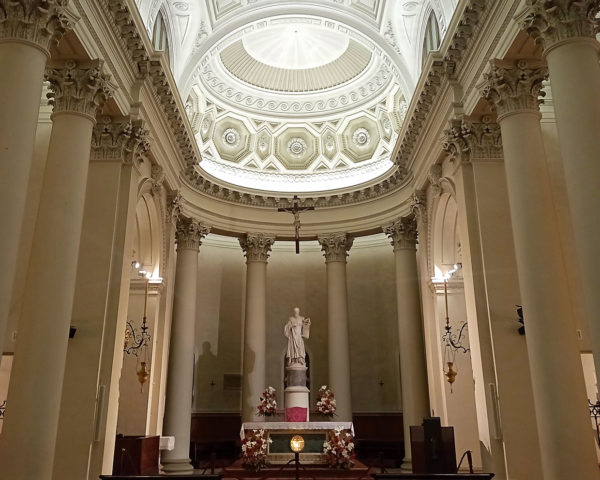
“It was said that he presented the people freedom from persecution,” explained Sara, as we stopped in front of the Basilica of Saint Marinus, where he supposedly declared the state of governance. “He said, ‘I give you freedom from both men’, referring to both religion and politics, and paved the way for the foundation of San Marino, which has always believed in the independence and liberty of our people.”
Today, San Marino remains independent and is governed in a parliamentary style of government headed by two Captains Regent acting as Head of State. Twice a year, the Investiture Ceremony of the Captains Regents presents locals and visitors a great spectacle of this unique ancient tradition that gave San Marino the privilege to be included as a UNESCO Heritage site.
Stamps and coins
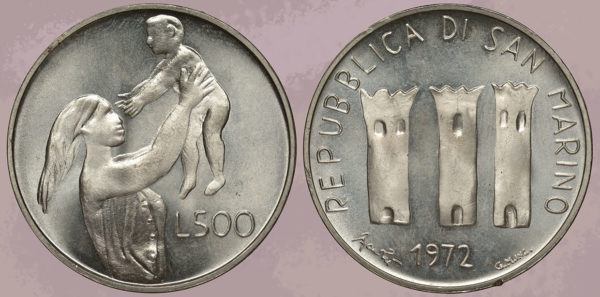
There are many ways a nation could exert its sovereignty – through conquest, through force. San Marino, whose political stance is on neutrality and peace, used the production of stamps and coins as an expression of sovereignty over its Republic. And so, over time, its philately became collectors’ items that also generated tourism income.
Paying a visit to the Stamps and Coins Museum might seem a bit niche for most visitors. But, with exhibits dating back to 1877, it is an interesting way to learn how the development of San Marino’s postal service and mint production has changed as the Republic’s status in the world changes along the way.
San Marino’s own culinary produce
Then there is the food. Like its Italian neighbours, Emilia-Romagna and Tuscany, San Marino prides itself on excellent local produce.
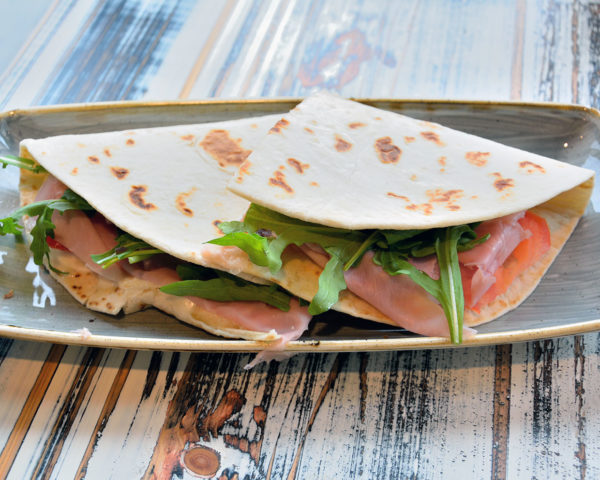
Daniel Terranova, the previous Director of Grand Hotel San Marino, met me in La Terrazza restaurant, part of the hotel, for a delicious lunch of San Marino produce. Spread across the table is a sharing plate of piadina sandwiches, cured meats, cheeses and a bottle of Sangiovese, sourced within the territory of the Republic, accompanied by a vista of the rolling hills plotted with forests, vineyards and villages.
“Yes it’s true, there are a lot of similarities between our culinary culture to the Romagna region just nearby,” Daniel says, referring specifically to the piadina, for which Rimini is also well known. “But there are differences in how we make it. For example, the bread we use for the piadina is of a different thickness, and the traditional fillings are different too.
Of course, we also try the cappelletti in brodo, small pasta dumplings in broth, which is a dish traditionally eaten at Christmas time. “It’s one of my favourite dishes,” Daniel adds. As we eat, the conversation about San Marino gradually shifts from its food to its politics. “Did you know that we have a letter from President Abraham Lincoln stored in our national archives?” Daniel enquires of us.
Abraham Lincoln, the honorary citizen
The letter in question holds the Presidential seal of the United States of America, dated 7 May 1861. It’s handwritten by Abraham Lincoln and also translated into Italian. In the letter, Lincoln expressed thanks for the offer of friendship and the honorary citizenship. Although politics, of course, is never by chance.
The unification of Italy in the 19th century challenged the independence of San Marino. The country needed allies to ensure its continued existence and reached its diplomatic hands towards the world. In particular, to one nation, the United States of America. A letter was dispatched to President Lincoln to express the wish for an alliance.
“Scholars believe that at the time, San Marino needed a backup, in order to maintain independence during the process of the Italian unification,’ explained Sara, who I believed could tell me the full story behind the letter. “The Captain Regents wrote a letter to Abraham Lincoln expressing their prayers for his success in the Civil War and to offer a diplomatic friendship as a State to reinforce the recognition of San Marino as an independent entity.”
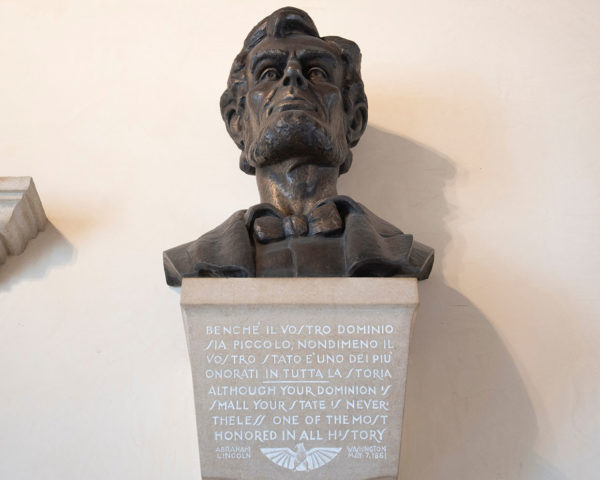
Today, a bust of Abraham Lincoln, erected in 1937, continues to be displayed on a wall inside the Palazzo Pubblico, the city hall, to commemorate this friendship between the two nations.
San Marino’s nine municipalities
Most people see San Marino as the mountaintop fortress. However, San Marino is, in fact, made up of nine castelli (municipalities). These include the land of the surrounding plains at the foot of the rocky Mount Titano.
The Titano Trail has a 110-kilometre network of trails connecting all nine castelli in a winding path, through forests, vineyards, gorges and lesser-known villages of San Marino. It can be broken up into different itineraries to complete in several days.
“We have a lot of nature around us, so it’s not just about history; it is a great destination for outdoor lovers too”, said Sara. From hiking to cycling to rock climbing, I can certainly see the appeal. San Marino is definitely more than just a fortress on a hill. If you’re ever in nearby Emilia-Romagna, why not pay the Republic a visit?
Plan your holiday with our Rimini travel guide
Written by Amy McPherson (@amymcp_writer) for Italia! #220 (April/May 2026)