
Plan your trip to Le Marche with our in-depth guide. From the ‘Velvet Beach’ of Senigallia to the peaks of the Sibillini Mountains, discover the best of central Italy.
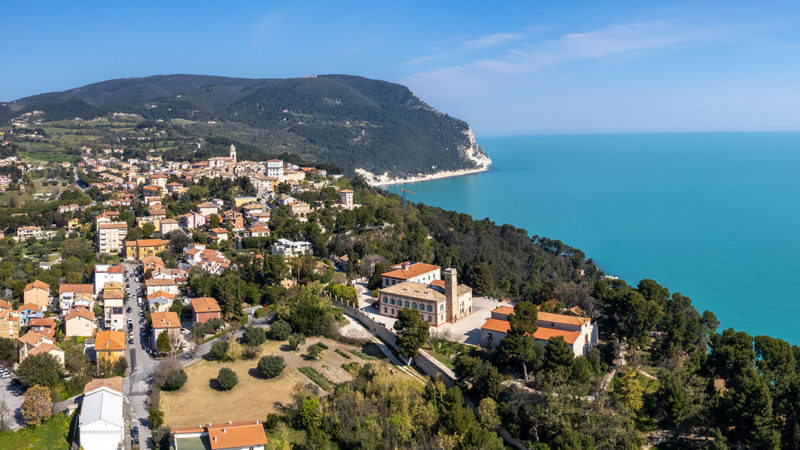
Regularly showered with accolades for its cleanliness and quality of life, Le Marche is a prosperous, rural region adored by visitors and property-hunters alike. Forming the ‘calf muscle’ of the Italian ‘boot,’ it sits halfway down the peninsula, bordered by the blue Adriatic Sea to the east and the limestone peaks of the Apennines to the west.
It is a well-proportioned region where diverse landscapes, ranging from golden beaches to wooded mountains, lie within easy reach of one another. As many locals say, it is entirely possible to enjoy a leafy mountain hike in the morning and be sunbathing on a beach by the afternoon.
Jump to:
- At a glance
- Le Marche regional guide
1. The coast
2. The hinterland
3. The mountains - Getting around
- Buying property in Le Marche
- Did you know?
Le Marche at a glance
Location:
Le Marche is on Italy’s central eastern coast. Its main neighbours are Emilia-Romagna, Umbria and Abruzzo. The border also briefly kisses Tuscany and Lazio.
Geography:
A diverse mix of 180km of coastline, rolling rural hills, and high mountain peaks.
Provinces:
Pesaro-Urbino, Ancona, Macerata, Ascoli Piceno, and Fermo.
Climate:
Temperate and welcoming. Warm-hot summers and cool winters (uplands can be cold at night).
Culture:
Ducal palaces and museums abound. A powerhouse of the Renaissance; birthplace of Raphael, Bramante, and Rossini.
Lifestyle:
Easy-going, orderly, and affluent, with a low population density and low crime rate.
Where to visit:
- For culture: Urbino and Macerata.
- For beaches: Senigallia and the Conero Riviera.
- For nature: Monti Sibillini National Park.
- For food & wine: Jesi (Verdicchio wine) and Offida (Vinsanto).
Le Marche regional guide
Le Marche lies on the eastern side of Italy, suspended between majestic mountains and the inviting sea. Much of the region is hilly or mountainous, boasting 13 protected areas, forests, and nature reserves. This includes the stunning Monti Sibillini in the south and the National Park at Monte Conero on the coast. It’s this diverse geography that makes the area so appealing to visitors and homebuyers alike.
Beyond its natural beauty, Le Marche holds a remarkable historical heritage, with over 30 significant archaeological sites, 200 Romanesque churches, and the Renaissance city of Urbino, famed for its 15th-century Palazzo Ducale.
1. The Adriatic coastline
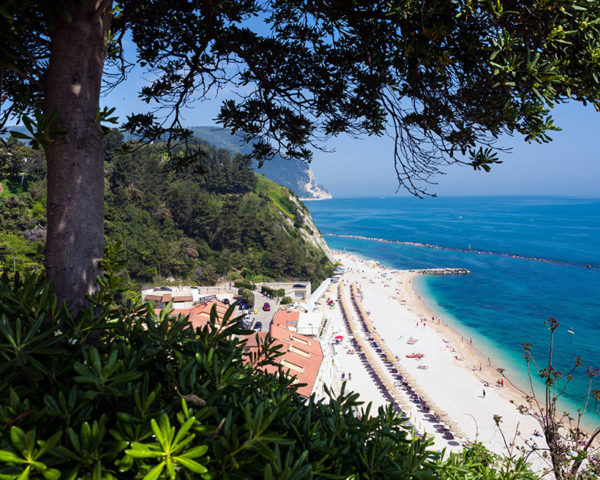
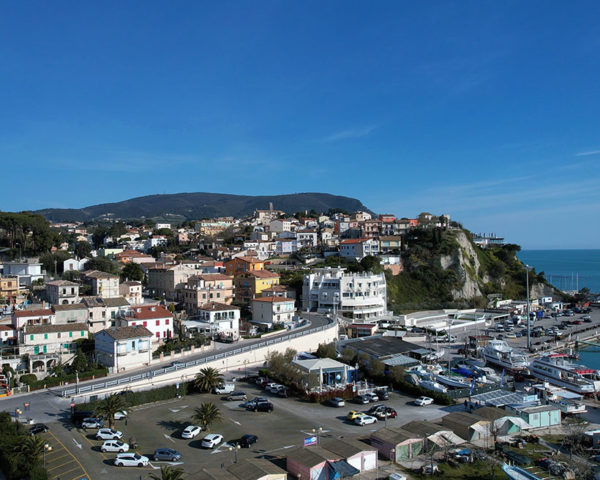
Le Marche’s seaside deserves a special mention. With over a hundred miles of gorgeous coastline, the region features long, sandy beaches and cliff-bound coves interspersed with pine forests and charming resort towns.
The seawater is typically warm and shallow, making this relaxed and welcoming region an ideal destination for families.
The north:
Pesaro is the largest resort here, bursting with shops and famous for its annual Opera Festival. Nearby Senigallia is known as the “Velvet Beach” for its 13km of incredibly soft sand.
The centre:
Ancona, the administrative capital and a busy port, sits halfway down the coast. Just south lies the Conero Riviera, a spectacular stretch featuring the Napoleonic fort at Portonovo and the cliffside village of Sirolo.
The south:
Continuing down, you find Pedaso (famous for its mussel festival) and Grottammare with its medieval old town, eventually reaching San Benedetto del Tronto, a vibrant fishing port and the region’s second-largest resort.
2. The rolling hinterland
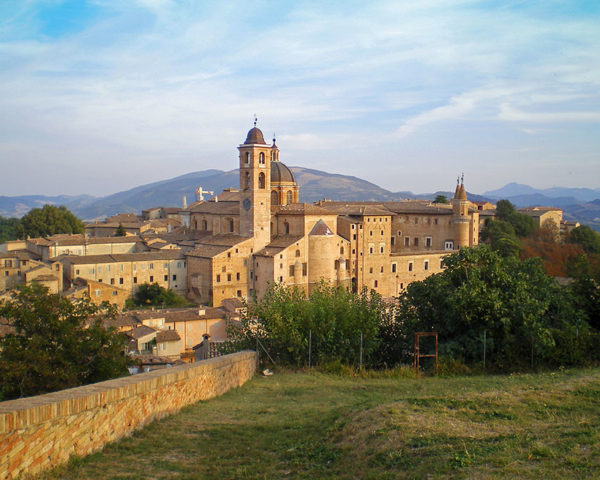
Move inland, and the landscape transforms into miles of gentle hills and open fields. This is farming country; a peaceful landscape punctuated by pretty hilltop towns and gentle valleys.
Urbino:
One of the region’s most eminent cities. This UNESCO World Heritage site rivals Florence for cultural significance but remains compact and bustling.
Macerata:
A hill town boasting the Arena Sferisterio, a 19th-century outdoor theatre that resembles a Roman arena and hosts a major musical festival every summer.
Ascoli Piceno:
Located near the southern border, this ancient town features one of the most beautiful marble-paved piazze in Italy and a wealth of medieval architecture.
Many other villages dot the landscape, including Arcevia (to the west of Ancona), perched on the foothills and surrounded by historic castles; Offida in the south, with its unusual triangular piazza and memorable vinsanto; and medieval Jesi, near Ancona, with its castle, cobbled streets and world-famous Verdicchio wines.
3. The majestic mountains
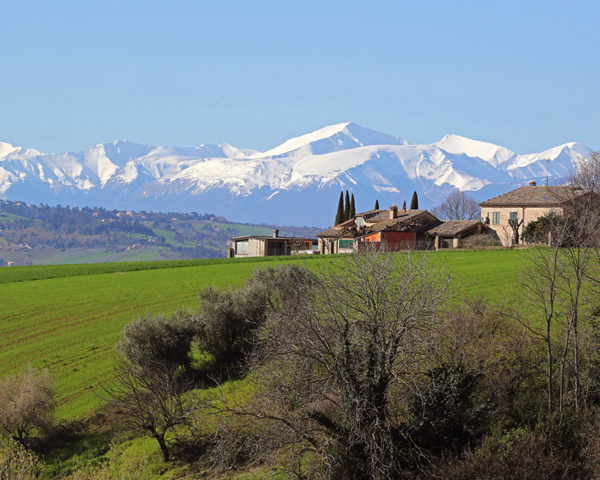
In the west, the hills rise into the Apennines and the Monti Sibillini. Created as a National Park in 1993, this area covers 70,000 hectares of wilderness.
It is a haven for nature lovers where you might spot Italian wildlife, including wolves, golden eagles, and peregrine falcons, among the peaks.
The area is dotted with medieval towns and criss-crossed with walking trails. Towns worth visiting include Castelluccio, Norcia and Montemonaco. Out of the towns, you can find shelter for the night in the extensive network of rifugi (mountain huts).
Getting around
By road:
The main autostrada (A14) and state highway (SS16) run swiftly along the coast. Once you head inland, the pace slows as roads weave through the rolling hills.
By rail:
Intercity train connections at Ancona link the region directly with Bologna and Rome.
By air:
Ancona is home to the region’s international airport, offering convenient access for international travellers.
Buying property in Le Marche
For those looking to buy a home in Italy, Le Marche remains a superb, relatively young market. While it first caught the eye of international buyers around the turn of the millennium, it remains a much more affordable alternative to Tuscany or Umbria.
Property market trends
The ‘restoration bargain’ era has shifted. Today, the market is focused on ready-restored properties.
Due to inflation and the availability of builders, most buyers now seek ‘instant gratification’ in homes that are finished and ready to enjoy immediately.
Location strategy:
The coast:
The most expensive area, dominated by the seaside market and modern apartments.
The hills (15–30 miles inland):
This is the ‘sweet spot’ for many buyers. Prices drop significantly once you leave the coast, yet you retain easy access to the sea and enjoy views of both the mountains and the Adriatic.
The mountains:
The western extremes offer the lowest property prices in the region. These higher-altitude areas are strikingly beautiful and perfect for those seeking a quiet, authentic retreat.
Holiday Rental Prospects
With its glorious geography, Le Marche attracts a discerning clientele of holidaymakers.
In coastal areas, July and August are easily filled, while inland properties within 40 minutes of the sea see robust demand through the spring and autumn. Meanwhile, careful marketing can help you secure attention in the more popular mountainous areas, too.
For owners, this is an excellent way to self-fund the maintenance of a second home.
Did you know? The shoe valley
Le Marche is arguably the best place in the world to pick up a pair of fine leather shoes. As the birthplace of Italian shoemaking, the region still produces about thirty per cent of all Italian footwear.
In the ‘Shoe Valley’ (around towns like Porto Sant’Elpidio and Montegranaro), you can visit outlet shops and artisans who hand-finish everything from high heels to stylish boots.
Many of these craftsmen are also experts in other fine leather goods, such as handbags and wallets.
Discover more with the top 10 things to do in Le Marche
Adapted from guides written by Fleur Kinson for Italia! magazine