
In this edition of our bilingual feature, Tom Alberto Bull discusses the trend towards using historic buildings for modern-day music events
Key words
Useful Italian words and phrases to add to your vocabulary.
- Ha suscitato molto scalpore
Has caused quite a stir - Intelligenza artificiale
Artificial intelligence - Scatenando un putiferio
Causing an uproar - Non sarebbe la prima volta
It would not be the first time - Va sottolineato che
It should be emphasised that - Ha dovuto superare
Had to overcome - Ci sono altri esempi
There are other examples - Ha poi aperto le sue porte a
Has since opened its doors to - Una vista sul mare
A sea view - Ho assistito a un concerto
I have been to a concert - Uno degli meglio conservati
One of the best preserved - Eventi dal vivo
Live events - Intrinseco interesse storico
Intrinsic historical interest - Ma anche per
But also for - Procedere con cautela
To tread carefully
Italiano | Musica tra le rovine
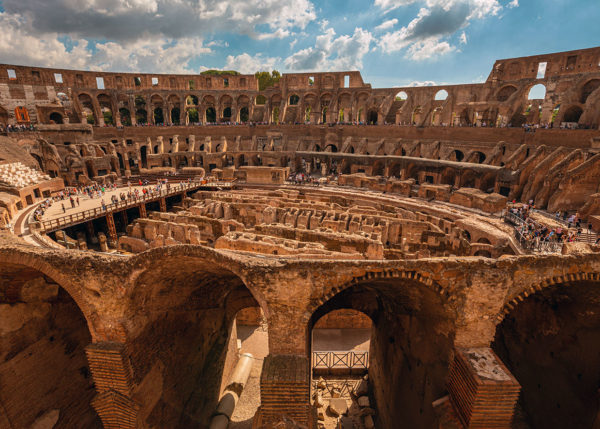
Il nuovo direttore del Colosseo, Simone Quilici, ha suscitato molto scalpore con la sua prima intervista pubblica da quando ha assunto l’incarico. La sua visione per il futuro del sito patrimonio mondiale dell’UNESCO include la possibilità di ospitare un numero limitato di concerti di artisti che considera “tranquilli” e che attirerebbero un pubblico rispettoso della fragilità del luogo. Ma in un mondo di social media e intelligenza artificiale era forse inevitabile che arrivasse una tempesta quando i contenuti generati dagli utenti mostravano luci stroboscopiche, musica elettronica e grandi folle, scatenando un putiferio tra gli abitanti del posto e gli storici.
Non sarebbe la prima volta che il Colosseo ospita concerti, anche se è passato un po’ di tempo dall’ultima volta che Andrea Bocelli ha onorato il sito nel 2017, e sono passati vent’anni da quando Paul McCartney vi si è esibito nel 2006. Va sottolineato che questi erano stati presentati come eventi speciali e il numero di spettatori era severamente limitato, come lo sarebbe ora.
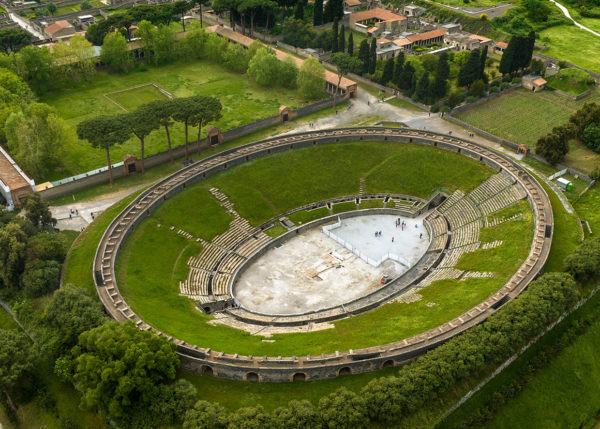
Probabilmente il concerto più famoso in un sito antico italiano non si è tenuto a Roma, ma nell’anfiteatro di Pompei, dove i Pink Floyd hanno registrato un set dal vivo che è stato poi distribuito come film nel 1972. Tuttavia, non c’era pubblico presente, e la band ha dovuto superare numerosi problemi tecnici per realizzarlo.
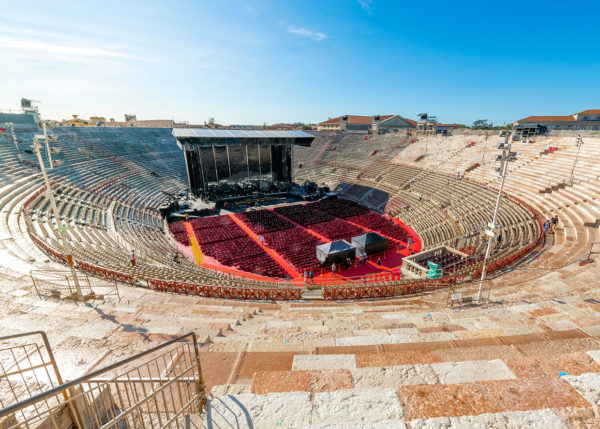
Ci sono anche altri esempi di anfiteatri che continuano ad offrire musica dal vivo. L’Arena di Verona ha ospitato per la prima volta un’opera nel 1913 e ha poi aperto le sue porte a Elton John (due volte), Sting e Luciano Pavarotti. La struttura dispone di posti a sedere moderni e può ospitare fino a 15.000 spettatori. Altri luoghi in cui si tengono concerti dal vivo includono l’arena greco-romana di Taormina, con una spettacolare vista sul mare come sfondo, e il teatro romano di Fiesole.
Personalmente ho assistito a un concerto di musica elettronica dall’altra parte dell’Adriatico, all’Arena di Pola, in Croazia, la cui struttura circolare intatta la rende uno degli anfiteatri romani meglio conservati. È stata un’esperienza speciale e unica che mi rimarrà impressa a lungo. Con una capienza di 5.000 posti, l’arena viene regolarmente utilizzata per un’ampia gamma di eventi dal vivo e ha persino ospitato due partite di hockey su ghiaccio professionistico.
Le arene antiche sono ricercate come sedi di concerti non solo per il loro intrinseco interesse storico, ma anche per la loro eccellente acustica, una caratteristica che dobbiamo alla competenza di architetti e ingegneri romani. Tuttavia, il loro valore incomparabile impone ai curatori di procedere con cautela, come dimostra la reazione all’intervista di Quilici.
English | Music among the ruins
The new director of the Colosseum, Simone Quilici, has caused quite a stir with his first public interview since taking over the role. His vision for the future of the UNESCO World Heritage site includes allowing a small number of concerts to take place by artists that he deems to be ‘calm’ and would attract audiences that respect the fragility of the venue. But in a world of social media and AI, it was perhaps inevitable that a storm would brew as user-generated content depicted strobe lights, electronic music and big crowds, causing uproar among locals and historians.
This wouldn’t be the first time that the Colosseum has hosted concerts, although it has been a while since Andrea Bocelli last graced the site in 2017, and twenty years have passed since Paul McCartney performed there in 2006. It should be emphasised that these were billed as special events and the audience numbers were severely restricted, as they would be now.
Possibly the most famous concert in an ancient Italian site didn’t actually take place in Rome, but in the amphitheatre of Pompeii, when Pink Floyd recorded a live set which was subsequently released as a film in 1972. However, there was no crowd in attendance, and the band had to overcome numerous technical issues to make it happen.
There are also other examples of amphitheatres continuing to offer live music. The Verona Arena first held an opera in 1913 and has gone on to open its doors to Elton John (twice), Sting and Luciano Pavarotti. The venue has incorporated modern seating and can accommodate up to 15,000 attendees. Other live venues include the Greco-Roman arena in Taormina, with a spectacular sea view as the backdrop, and the Roman theatre of Fiesole.
I personally have been to an electronic concert across the Adriatic Sea at the Pula Arena in Croatia, whose intact circular structure makes it one of the best preserved Roman amphitheatres. It was a special, unique experience that will stay with me for a long time. With a capacity of 5,000, the arena is regularly used for a wide range of live events and has even hosted two professional ice hockey games.
Ancient arenas are sought after as concert venues not only for their intrinsic historical interest but also for their excellent acoustics, a trait that we owe to the expertise of Roman architects and engineers. However, their incomparable value means that curators need to tread carefully, as demonstrated by the reaction to Quilici’s interview.
Practice your language skills with more ways to learn Italian
Written by Tom Alberto Bull for Italia! issue 219 (Feb/Mar 2026)