Who was Maria Montessori? Learn about this influential educator in a brief history of Italy’s first female physician
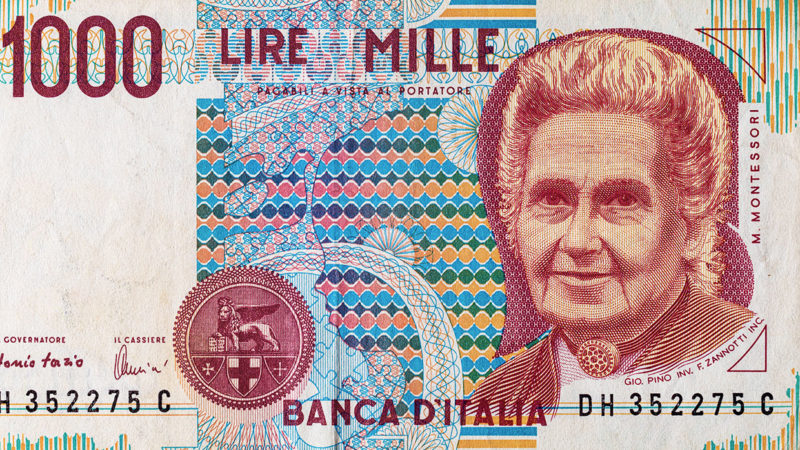
Maria Montessori (1870-1952) was a pioneering physician and educator best known for the philosophy of education that bears her name. Today, her model for schools is a global standard, found in nearly every country.
While her approach was considered radical in the early 20th century, its ‘revolutionary’ feel has only faded because her ideas have become so deeply integrated into general modern education.
The early life of Maria Montessori
Born in 1870, the year that Italy became a fully unified nation state, Maria Montessori had the advantage in life that her parents were enlightened progressives who believed in female education.
She also had a maternal uncle who was a noted geologist and naturalist, and who also influenced and encouraged her in her schooling. And she had the further good fortune that when she was five, her father’s work took the family from rural Le Marche to Rome.
So young Maria attended primary school in Italy’s thriving new capital. At thirteen, she was enrolled at the Regia Scuola Tecnica Michelangelo Buonarroti, where she focussed on engineering. It was here that she began to develop ideas about what a school should look like.
By the time she was sixteen, her attention had turned to mathematics and she went to the Regio Istituto Tecnico Leonardo da Vinci. When she was twenty, she matriculated as a medical student at the University of Rome.
How Dr Maria Montessori became a pioneer of self-paced learning
In 1896, Maria graduated from Rome University with a degree in medicine (the first woman to do so). She then worked in psychiatry, with a focus on children with learning difficulties.
Dr Montessori believed that these children’s difficulties were usually not medical but pedagogical, and the results she achieved through applying her methods bore her theory out. She then discovered that her methods could be applied with similar success to any child.
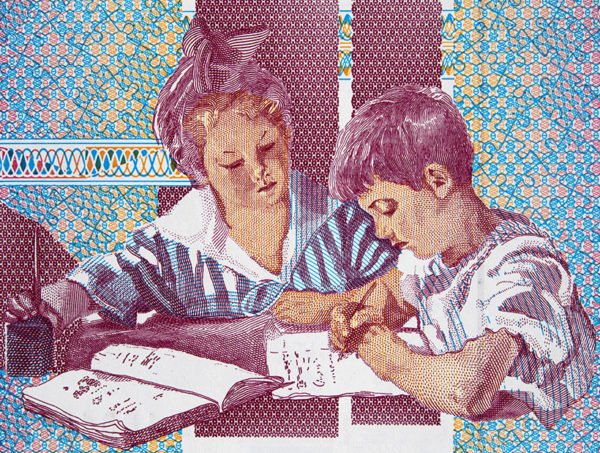
Her insight was that children learned more when they were encouraged to develop their own interests and lines of inquiry. This stood her in stark contrast to traditional teaching methods, which were structured around rote learning, where the child simply repeats information, often without ever really understanding what it is they are being taught.
There’s a lot of theory to it, as Dr Montessori was scrupulously scientific in her approach.The underlying principle is that children are capable of learning by themselves, and also from each other: the teacher doesn’t have to spoon-feed everything to them. “Follow the child,” she used to say.
Discover more of history’s influential Italian women
(Article originally printed in Italia! #216 | Aug/Sep 2025)